
Southern Utah University Professor's Groundbreaking 'God Particle' Study Unlocks Revolutionary Medical Breakthrough |
Southern Utah University's Dr. Tyler LeBaron partners with Nagoya University on groundbreaking molecular hydrogen study, challenging established science. |
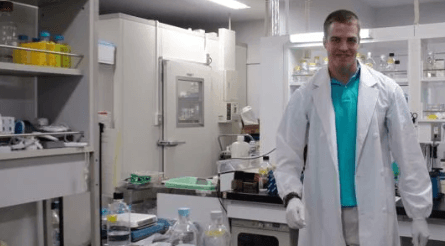
A scientist based in Southern Utah has collaborated with Nagoya University in Japan to publish a study that could explain the potential benefits of molecular hydrogen therapy.
Dr. Tyler LeBaron's fascination with what he calls "the god particle" has driven him to explore hydrogen's fundamental role in existence itself.
The breakthrough couldn't come at a better time for Cedar City's growing reputation as a research hub, with Southern Utah University emerging as a significant academic force in the region.
LeBaron explains that hydrogen sits at number one on the periodic table for good reason - it's the universe's most fundamental building block, consisting of just one electron and one proton.
The collaborative research effort between the SUU adjunct instructor and prestigious Nagoya University has produced findings that challenge long-held scientific assumptions.
Previous scientific thinking suggested hydrogen molecules were biologically inert, but this new study reveals they specifically target the Rieske iron-sulfur protein.
This discovery represents a complete reversal of established medical understanding about how molecular hydrogen functions in therapeutic applications.
The therapy shows promise for treating brain damage from strokes, as demonstrated in groundbreaking 2007 Nature Medicine research conducted on laboratory subjects.
LeBaron's journey from biochemistry and exercise science to cutting-edge hydrogen research at SUU exemplifies the university's commitment to innovative scientific exploration.
Cedar City's academic landscape continues expanding, with Southern Utah University now serving over 15,000 students across its 129-acre campus.
Hydrogen therapy has historical precedent, having been used to prevent decompression sickness in deep-sea diving since the 1940s.
The international collaboration between LeBaron's work at SUU and Nagoya University's neurogenetics department demonstrates Utah's growing influence in global scientific research.
While molecular hydrogen is naturally a tasteless, odorless but highly flammable gas, therapeutic concentrations remain safely below flammable levels.
This research positions Southern Utah University as a legitimate player in the rapidly advancing field of hydrogen medicine, particularly as Japan leads global molecular hydrogen research initiatives.
LeBaron's work through the Molecular Hydrogen Institute continues building bridges between domestic and international researchers advancing hydrogen's therapeutic potential. |
0 Comments
Join the conversation
Be the first to comment
Share your thoughts above.