
NASA Discovered a Hidden Rainbow Canyon in Cedar City Utah |
Exploring rainbow canyon utah through satellite and natural wonders |
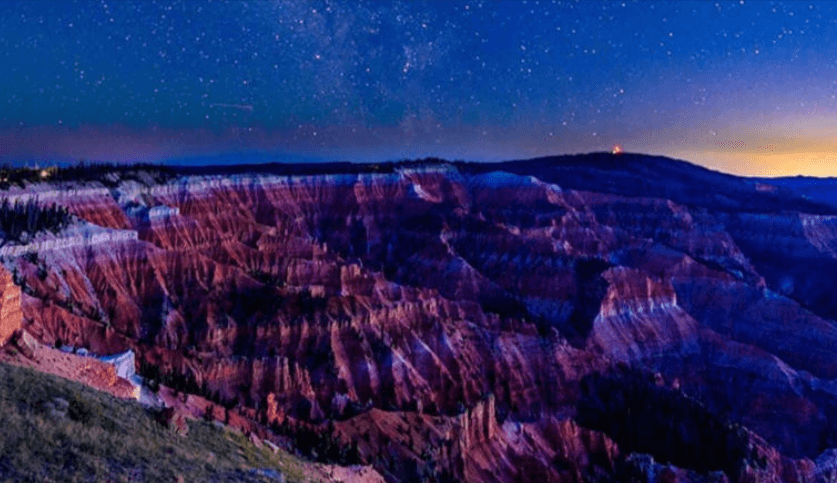
Perched at an elevation of approximately 10,000 feet, the vibrant cliffs and intricate formations of Cedar Breaks National Monument in Utah narrate a geological saga spanning tens of millions of years. Recent imagery from NASA's Landsat 9 satellite has unveiled the amphitheater's stunning array of colors and patterns, offering a fresh perspective on this natural marvel.
The amphitheater's striking hues originate from sedimentary rock layers deposited between 50 and 25 million years ago, during the era of the ancient Lake Claron. Over time, these sediments solidified into limestone, with varying environmental conditions imparting distinct colors to the rock strata. Periods of abundant water led to the formation of pale-colored rocks, while drier intervals resulted in vibrant red and orange layers due to iron oxidation.
The high elevation of Cedar Breaks influences its climate and ecology. Winters are notably harsh, with nearby areas like Brian Head receiving substantial snowfall annually. Despite these conditions, resilient species such as bristlecone pines thrive along the rim. Some of these ancient trees have stood for over 1,700 years, showcasing nature's tenacity.
The recent satellite imagery not only highlights the monument's geological features but also underscores the dynamic processes that have sculpted this landscape. From the deposition of sediments in ancient lakes to the forces of erosion and tectonic uplift, Cedar Breaks stands as a testament to Earth's ever-changing nature.
For those captivated by geological wonders, Cedar Breaks offers a vivid window into the planet's past, now further illuminated by the advanced imaging capabilities of Landsat 9. |
0 Comments
Join the conversation
Be the first to comment
Share your thoughts above.