
Proposed AI Data Center Expansion in Cedar City, Utah |
Exploring the data center proposal and conditional use permit considerations |
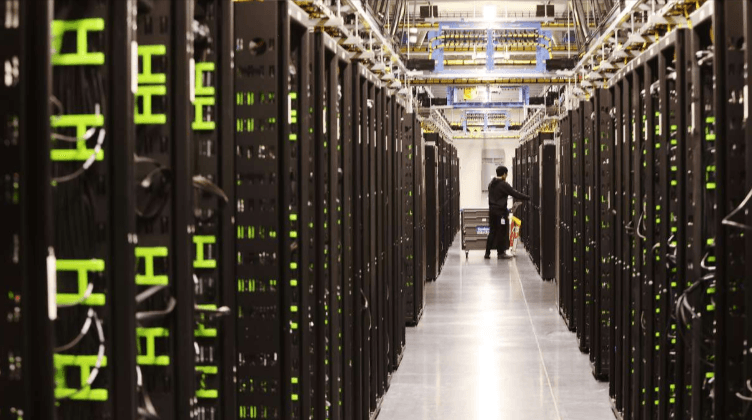
Iron County is on the brink of a transformative development as the Planning Commission prepares to assess a conditional use permit for a proposed AI data center near Cedar City.
This public hearing, scheduled for Thursday evening, offers residents a platform to express their views on the project.
The application, submitted by Pronghorn Development, pertains to a 640-acre parcel of undeveloped industrial land owned by Blind Mice LLC, located several miles west of Cedar City along Antelope Springs Road.
Notably, the proposal does not specify a confirmed operator for the data center at this stage.
Project documents outline a multiphase campus designed to support artificial intelligence computing operations, including the construction of on-site natural gas-fired power generation facilities.
According to Brett Hamilton, planner and services coordinator for Iron County, these power plants are intended solely for the data center's operations and will not supply electricity to local homes or businesses.
Hamilton also mentioned that the applicant has not approached the county regarding additional power sources, and the proposal does not clarify whether the facility would connect to the regional grid for backup purposes.
These generation facilities would require separate state and federal permits and must comply with air emissions regulations.
In addition to power generation, the application details projected water usage for both construction and long-term operations.
The proposal indicates that the facility plans to purchase existing water rights rather than seek new groundwater permits.
Data centers are known for their high water demand and intensive cooling needs, raising concerns about water use, emissions, and long-term infrastructure impacts.
To address these concerns, the facility would implement a closed-loop cooling system, circulating and reusing water instead of continuously discharging and replacing it.
The proposal estimates an initial fill of approximately 8 acre-feet for the cooling system, equating to roughly 2.6 million gallons.
During construction, projected water use ranges from 10 to 20 acre-feet per year, with ongoing annual use estimated at 3.13 acre-feet once fully operational.
For context, a typical Utah household uses between 0.5 and 1 acre-foot of water per year, meaning the facility's ongoing annual use would be comparable to the yearly consumption of about three to six homes.
Financial projections included in the application estimate the total build-out valuation at approximately $30 billion, with an anticipated $280 million in annual property tax revenue at full development.
These figures reflect potential value at full build-out, which would occur in phases over several years.
If realized, this additional valuation would significantly increase Iron County's overall tax base.
In Utah, property tax rates are calculated based on total assessed value, meaning that when large amounts of new value are added, the rate applied to individual properties can be reduced.
County Auditor Luke Little noted that such an outcome would depend on full build-out.
The submitted materials also reference the possibility of participating in the Utah Inland Port Authority.
Properties within the Utah Inland Port Authority operate under a different property tax structure established in state law.
Under that framework, 75 percent of the property tax increment, meaning the new tax revenue generated above a base value, is directed to the Inland Port Authority for up to 25 years.
The remaining 25 percent of that new growth is distributed among local taxing entities, including the county and school district.
This structure means local governments would receive a smaller share of the additional tax revenue generated by the project during that period.
Any decision to include the project within the Inland Port would require separate approval by the Iron County Commission.
While Inland Port participation is referenced in the project's submitted materials, it is not part of the Planning Commission's conditional use permit review.
Since the land is already zoned for industrial development, the Planning Commission's role is to determine whether this specific proposal meets county code requirements, not whether industrial development should occur there.
A conditional use permit allows certain projects if they meet standards already written into code.
Under Utah law, if those standards are met and impacts can be reasonably addressed through conditions, approval is generally required, even if the project is unpopular.
Public comment remains crucial, as it becomes part of the official record and can influence what conditions are added.
Comments can also be reviewed later in an appeal or legal challenge.
This differs from a zoning change, which is a legislative decision where elected officials have broader discretion.
The public hearing will begin at 5:30 p.m. Thursday at Festival Hall, 105 N. 100 East in Cedar City. |
0 Comments
Join the conversation
Be the first to comment
Share your thoughts above.